
UNDER AN HOUR
Little or nothing
A 2014 review found it is not necessary to take in large amounts of carbohydrate for exercise of about 30 minutes to an hour. A small amount, or even a mouth rinse, may be enough.
Check your run candymanrun
00WHAT THE SPORTS SCIENCE SAYS

A pocket of sweets is real race fuel.
On a long run your muscles burn through their stored carbohydrate. Sports nutrition research shows when topping it up helps, roughly how much per hour, and why practising it matters as much as the amount.
Check your run01Principles
02THE SHORT ANSWER
Research ties carbohydrate advice to time on your feet.
The longer the run, the more it matters.
UNDER AN HOUR
A 2014 review found it is not necessary to take in large amounts of carbohydrate for exercise of about 30 minutes to an hour. A small amount, or even a mouth rinse, may be enough.
Check your runTWO TO THREE HOURS
For runs of 2 to 3 hours the same review suggests up to about 60 g an hour. Sweets, gels, drinks and low-fibre snacks all count; choose what sits well.
See the numbersRACE DAY
Reviews of runners' stomach problems advise practising your fuelling in training and avoiding fibre, fat and very concentrated drinks during the race.
How to practise03A QUICK RUN CHECK
Pick the kind of run to see what sports nutrition research suggests about carbohydrate on the move. The bar shows how much fuelling matters for that run.
Figures are from reviews and position stands, mostly based on trained athletes. This is general information, not personal nutrition or medical advice.
04TWO NUMBERS WORTH KNOWING
One figure on how fast sugar can be used,
one on how often stomachs object.
≈ 60g an hour
Glucose the body can use per hour
Glucose is absorbed by one transporter in the gut, which becomes saturated at around 60 g an hour. Adding fructose, which uses a different route, pushed use above that in lab studies.
ONE SUGAR · JEUKENDRUP 2014
30–50%
Athletes reporting gut complaints
Studies generally suggest 30 to 50% of athletes have gut complaints during exercise, and estimates for distance runners range from 30 to 90% depending on the study.
STOMACH TROUBLE · DE OLIVEIRA 2014
A large study of endurance events found carbohydrate intake varied widely between athletes, and was lowest in marathons and highest in cycling and triathlon (Jeukendrup 2014).
05FOUR HABITS TO PRACTISE
The research leans on one idea again and again: fuelling is a skill. Try these on long training runs, not for the first time on race day.
Little and often works better than one big hit. In one study cyclists did better taking the same dose every 30 minutes rather than every 60.
Drinks, gels, sweets and low-fat, low-fibre bars all work. The review says the choice should be based on personal preference.
Solid food and very concentrated sugar drinks can slow how fast fluid is absorbed, so plan water alongside your sweets.
Practising your race fuelling in training is advised to lower the chance of stomach trouble and may help the gut absorb more.
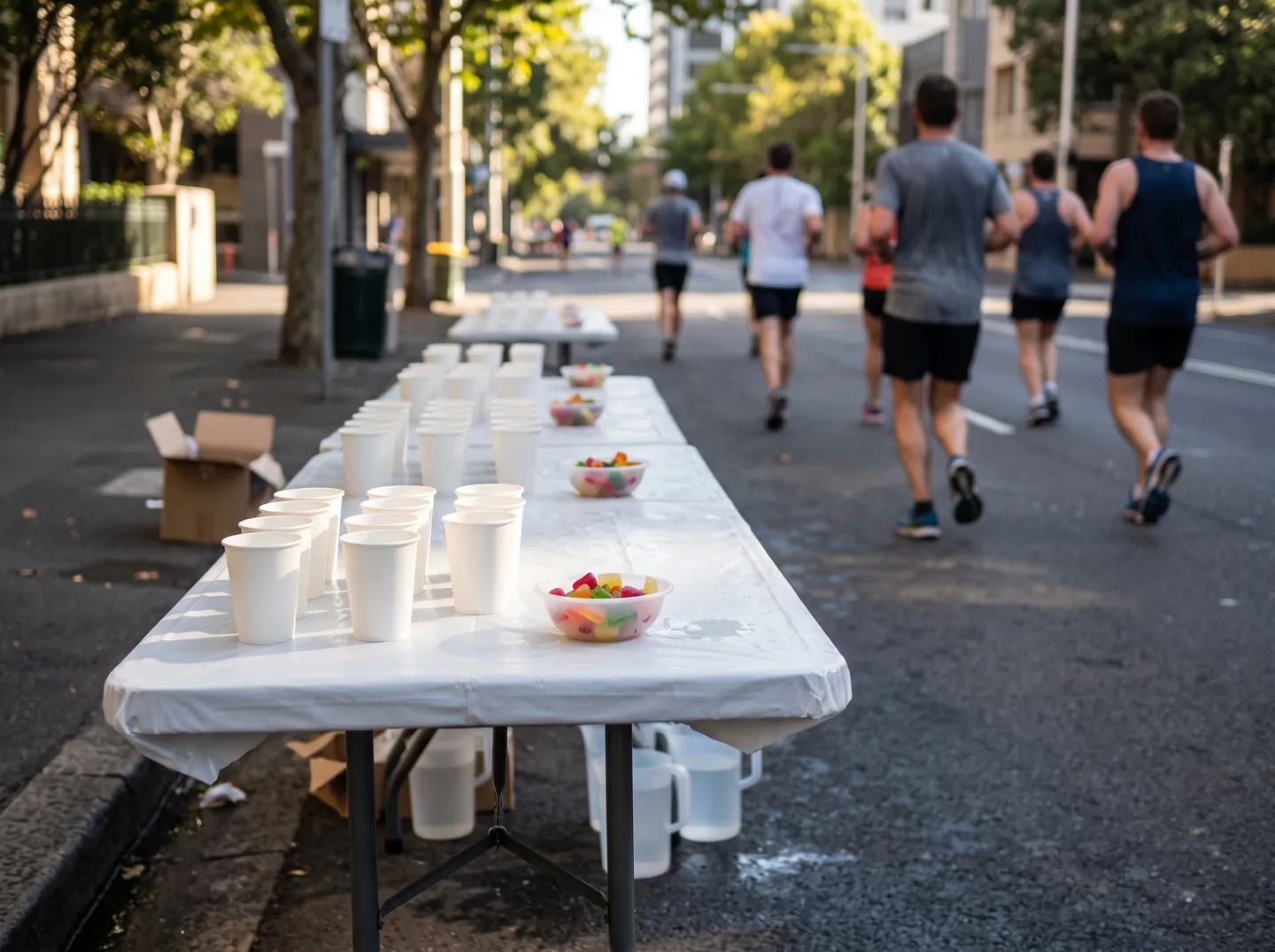
06SUGAR OFF THE RUN

The NHS advises adults to have no more than 30 g of free sugars a day, and lists sweets among the foods to cut down on. An hour of race fuel can be twice that.
That is why sports advice ties sugar to the long session itself. Outside long or hard training, the everyday guidance on sweets, sugary drinks and teeth still applies.
07Questions
Usually not much. A 2014 review found large amounts of carbohydrate are not necessary for exercise of about 30 minutes to an hour, although a small amount or a mouth rinse may help.
Reviews suggest up to about 60 g an hour for 2 to 3 hours of exercise, and about 90 g an hour for ultra-endurance events using a mix of sugars. Slower runners may need less.
Glucose is absorbed by a transporter that becomes saturated at around 60 g an hour. Fructose uses a different transporter, so a mix lets more carbohydrate be used per hour.
Gut complaints are common in endurance sport. A review linked them with fibre, fat, protein and very concentrated sugar drinks taken during races, and with dehydration.
Possibly. Animal studies show gut sugar transporters increase on a high-carbohydrate diet, evidence in people is limited, and practising race fuelling in training is still recommended.
08Sources
ABOUT THIS NAME
candymanrun.com is part of the DoodleSale portfolio. It isn't in an auction right now, but you can ask about leasing it.